Our science.
Metabolic Circuits of Microglial Immunity
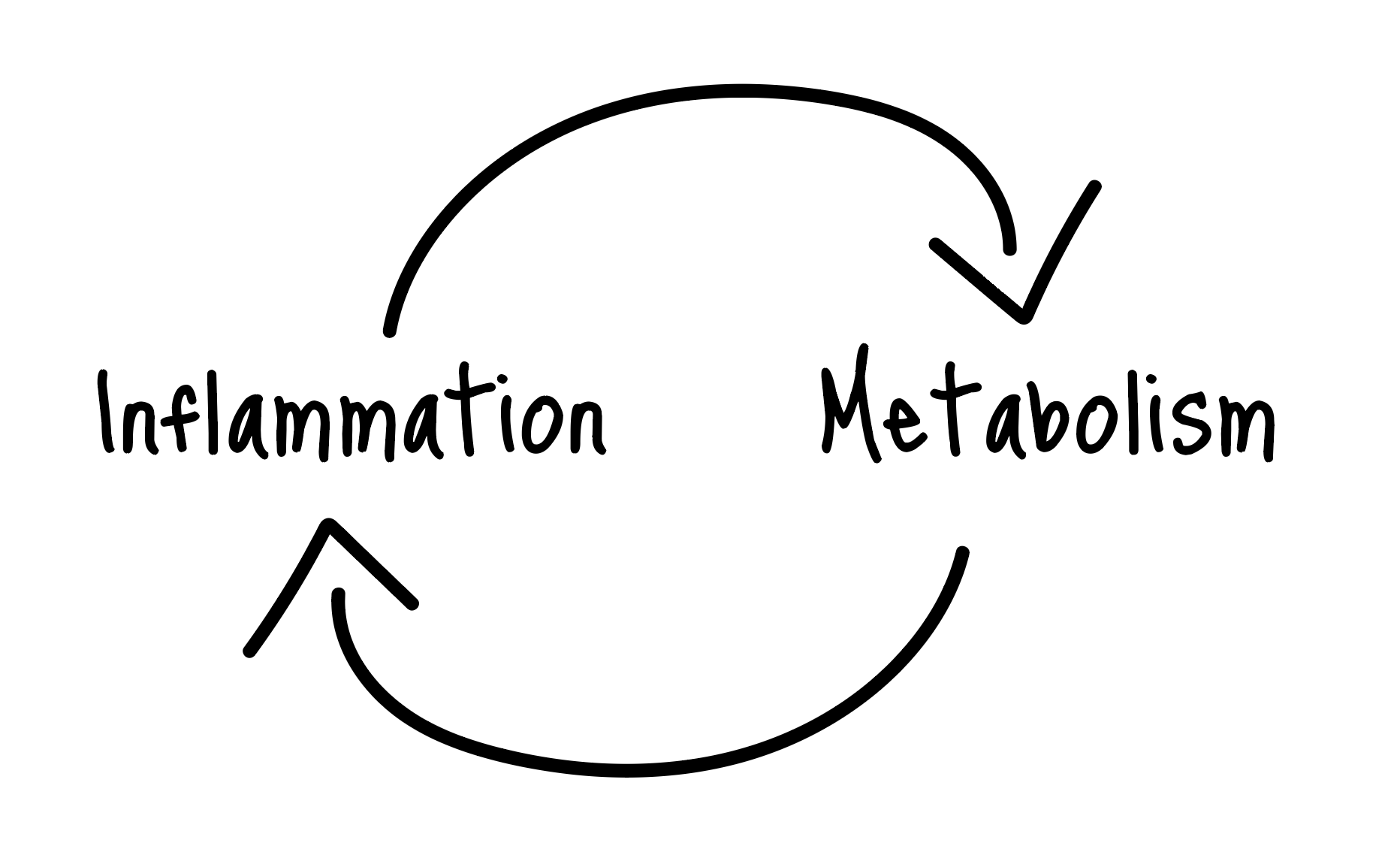
Microglia are the brain’s resident immune cells, but their function depends as much on metabolism as on inflammatory signaling. Our lab investigates how metabolic pathways govern microglial activation, resolution, and exhaustion. Using microglia derived from human induced pluripotent stem cells (iPSCs) CRISPR-edited to carry disease-associated risk and protective alleles, we map how energy utilization programs are rewired at baseline and during inflammatory challenge. We are particularly interested in how metabolites tune chromatin to shape immune memory and determine whether microglia resolve or further perpetuate inflammation.
The Neural Logic of Inflammation
Cytokines are not just immune messengers, they are also potent neuromodulators that reshape neuronal excitability and circuit dynamics. We study how inflammatory cues are sensed, interpreted, and spatially restricted across the brain, defining “inflammatory hotspots”. By leveraging brain organoids with tools to control and monitor neuronal activity, we explore how cytokines alter synaptic signaling, and how persistent inflammation may rewire brain circuits in Alzheimer’s disease and related disorders.

Glial Feedback Loops in Neuroinflammation
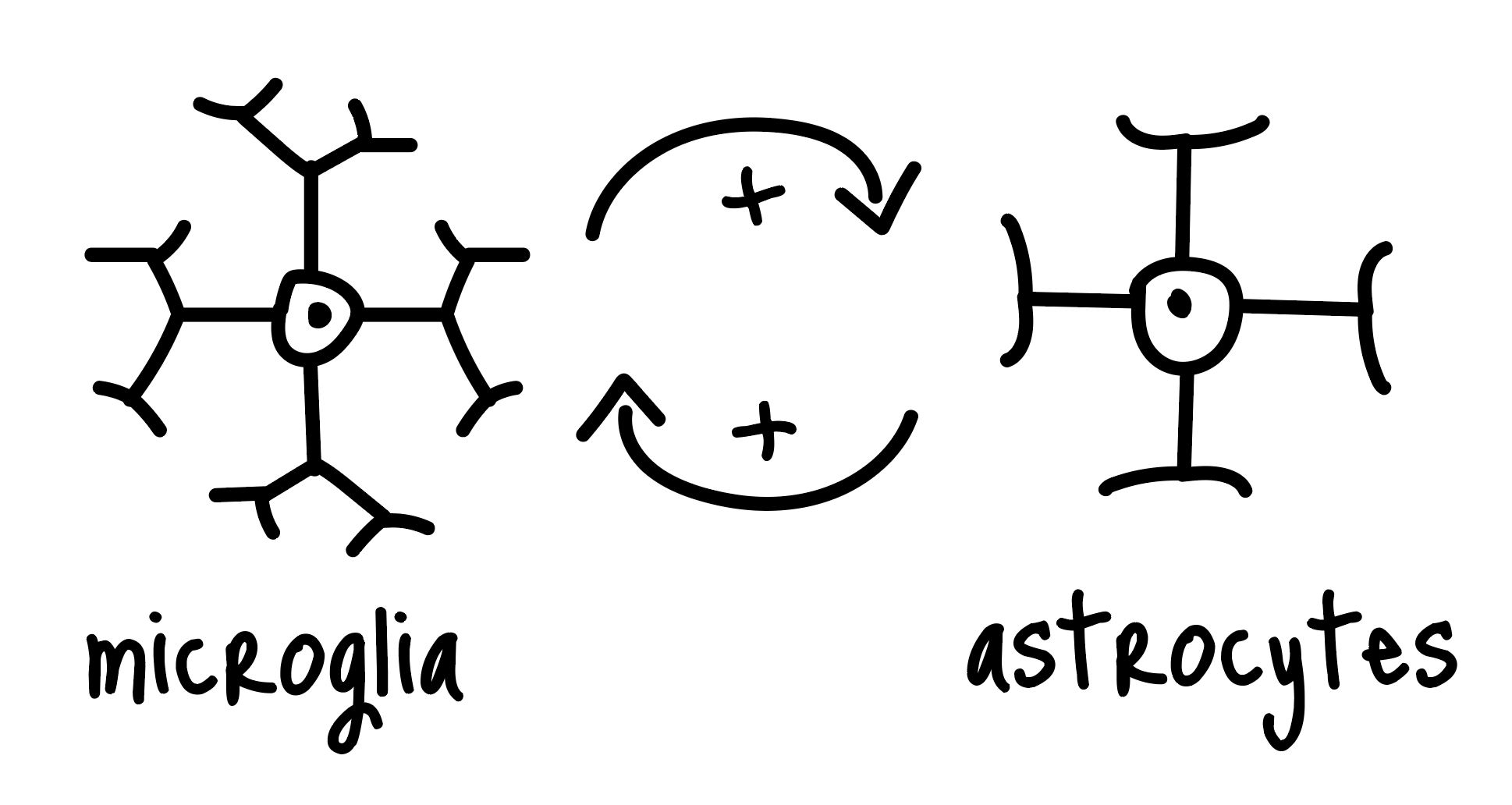
Microglia and astrocytes engage in powerful feedback loops that can amplify or resolve inflammation. We dissect these glia-glia interactions using engineered co-culture and organoid systems that capture multicellular dynamics in a human-based context. By combining genetic perturbations, functional imaging, and single-cell multi-omics, we are identifying molecular circuits that convert local immune activation into system-wide inflammatory states. Our goal is to uncover leverage points that can restore balance to glial networks under stress.
Engineering better Human Brain Models of Disease
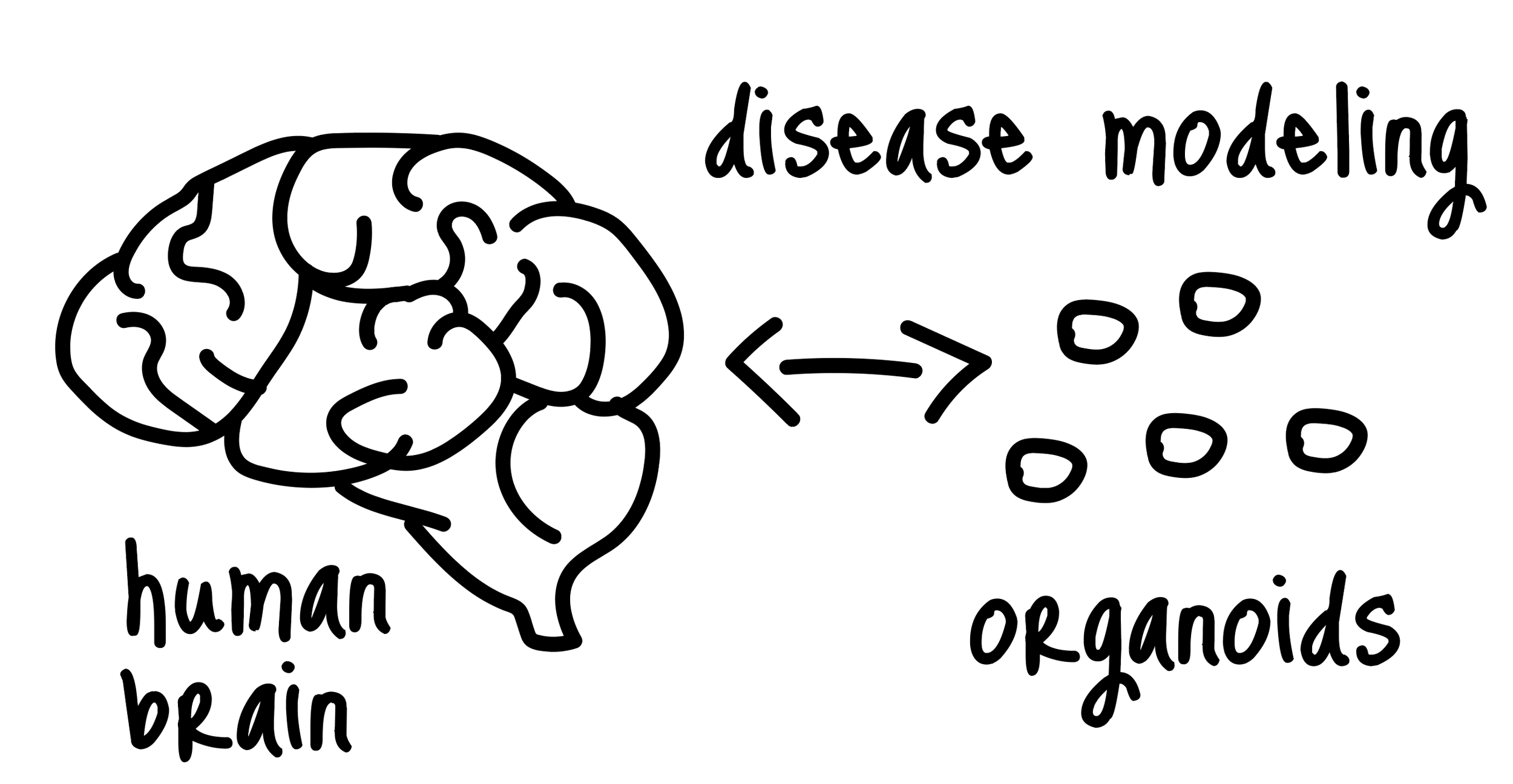
To translate cellular discoveries into meaningful biology, we are engineering human brain models that more faithfully recapitulate the activity-dependent processes that shape the brain. Using optogenetic and chemogenetic tools to precisely control neuronal firing, we mimic developmental patterns of network activity that accelerate maturation, diversify cell types, and promote the emergence of functional neuronal-glial interactions. The result is a new generation of brain organoids that more closely resemble the architecture and physiology of the human brain, enhanced by engineered interfaces that expose these tissues to biologically relevant cues such as cerebrospinal fluid, inflammatory mediators, and metabolic signals.
Additionally, we are scaling up measurements of network activity in these organoids to serve as a functional readout for high-throughput screening. By combining genetic and pharmacologic perturbations with all-optical electrophysiology, we can systematically test how diverse factors influence circuit dynamics and resilience. This approach will allow us to identify new interventions that preserve or restore network function in Alzheimer’s disease, transforming complex neural activity into a measurable output for therapeutic discovery.